

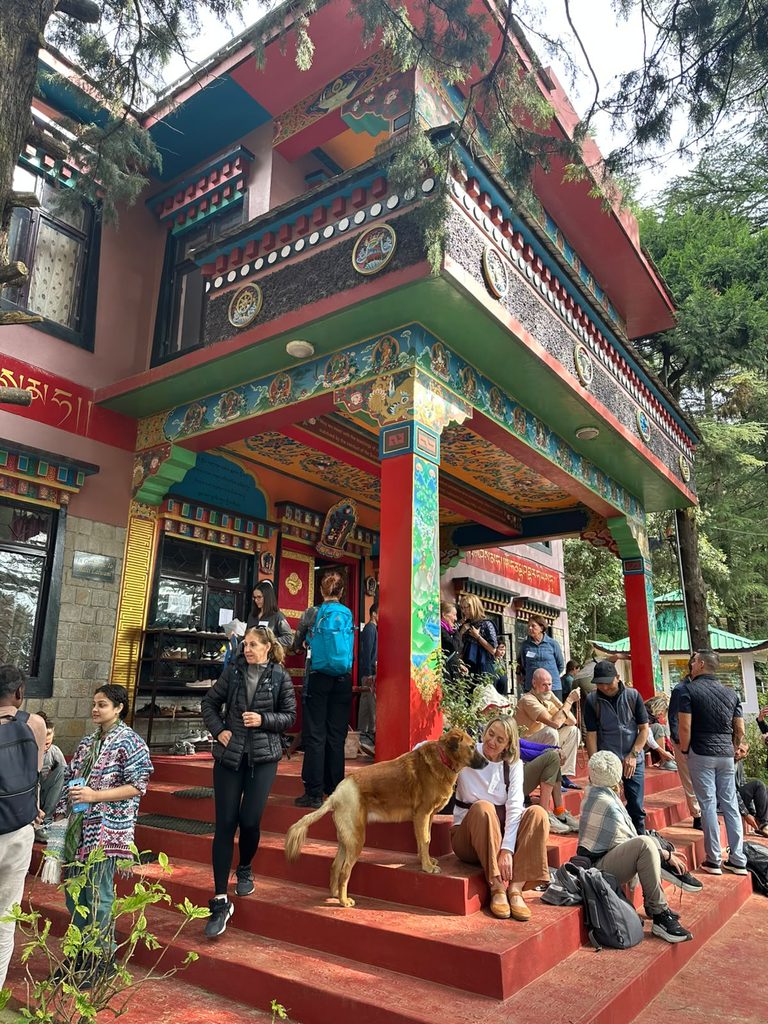
I knew of Tushita Meditation Center through social media. The pictures I thought were interesting, but I wasn’t sure I would end up there. Come late September, I found myself in India with a few weeks to kill and not much to do. And somehow I felt that I should look into their courses. They had a 10 day Introduction to Buddhism course available from 30 September 2026 to 9 October 2026 which was available. So I signed up and soon found myself in the picturesque town of Dharamsala. One shared taxi ride up the mountain and a short climb later I found myself in Dharamkot, where Tushita is located.
The day before someone at a hostel that I was staying at asked me about what I was going to do there. I said I had no idea! I knew they would be taking our phones and we would not be allowed outside the property for 10 days. We would also not be able to cook anything and would have to eat what was being served. Also they did not allow running within the premises, which was difficult for me. The course would also be in silence, meaning you aren’t allowed to talk to anyone for the duration of the course. I thought it was going to be an interesting prison experiment for myself. I didn’t know anything more than that.
Life at Tushita
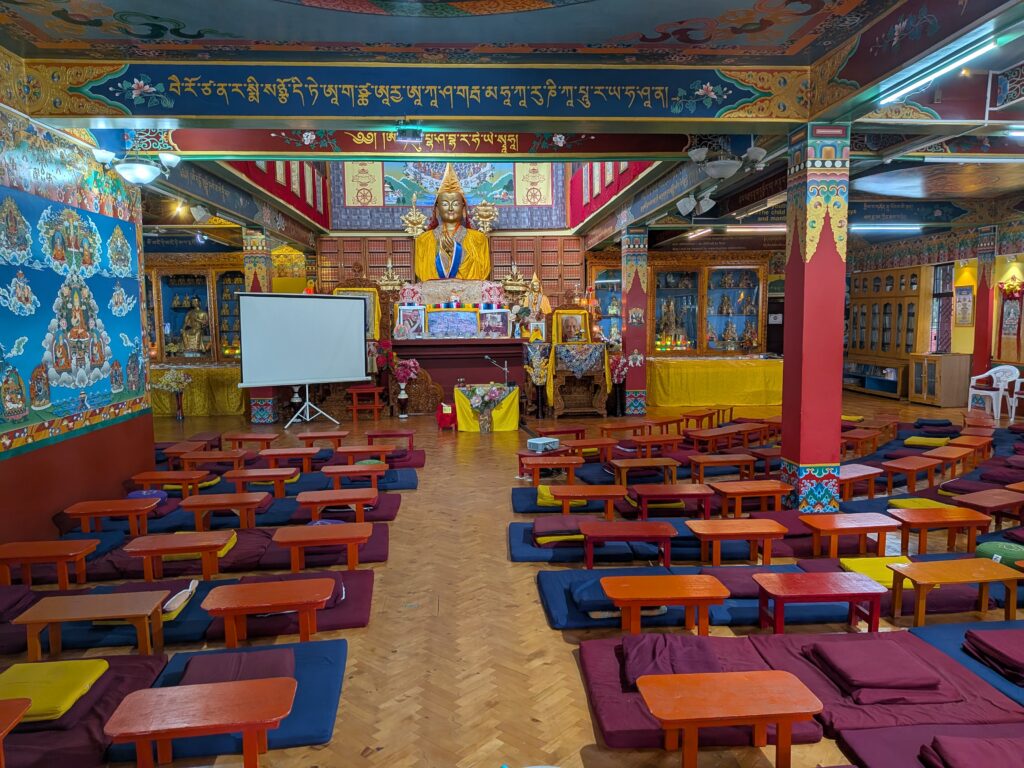
On 29th of September I got to the property to find a large group of people seated there. I took a seat at back of the group. The group was a good mix of Indian and foreign students, with the majority group being from Israel. After a while someone came in and explained us the process we would be going through to check in. The check in process was smooth and very well managed. Unless you are old or need accommodation, you would be in the dorms with other people. They gave us option for extra blankets, asked us to pay the balance amount and finally asked us to deposit electronics for the duration of the course. The course fees are more than reasonable.
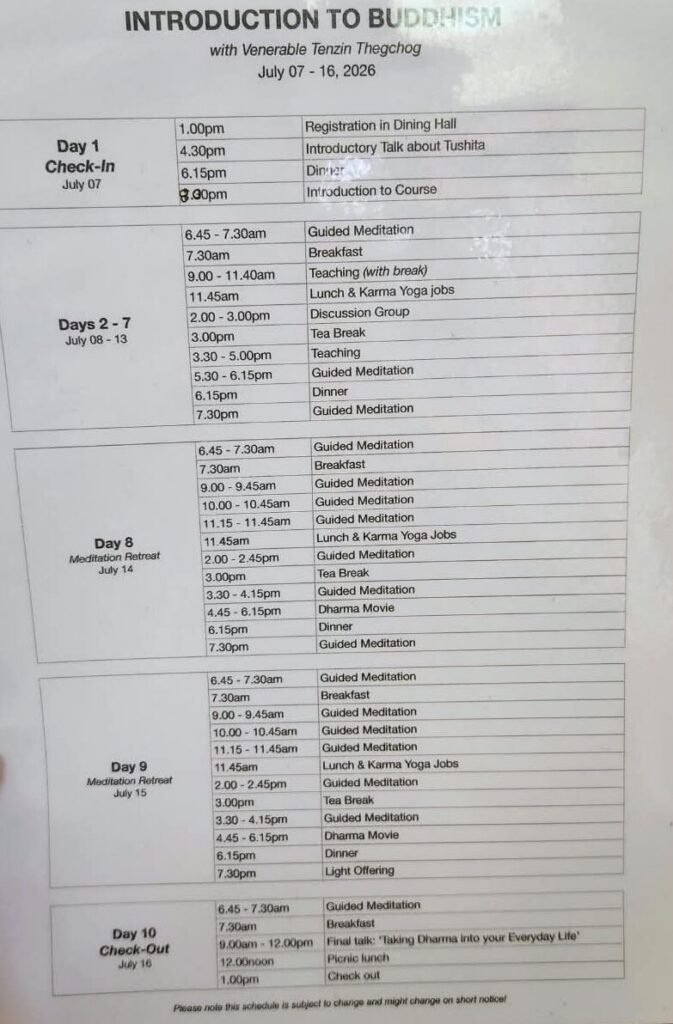
We were then given the timetable and were told that we would be in silence for the duration of the course starting on day 1. We were also handed our Karma Yoga or service jobs that we would have to do for others. I was handed the task of switching on and off lights in the main hall. Some other jobs were washing dishes, sweeping floors, cleaning toilets, banging the gong to alert students of the next class.
We had dinner that evening and it was similar to most other food that you would have. Food at Tushita is vegetarian, simple, decently nutritious and filling. Ofcourse you can’t expect ingredients to be the best. For eg, they won’t use olive oil for cooking. But for 10 days it should not be a problem. Lot of people had concerns about diarrhea, but from my group nobody got it. Most days the breakfast was bananas, peanut butter, bread, honey and olives. Lunch had rice, some gravy like dal, vegetables, bread and sometimes something special like pizza, baked goods, cake. Dinner was relatively less heavy and we had some kind of soup, bread and often leftovers from morning.
The day begins at 6am at Tushita. You wake up with the morning gong, get ready and get to the meditation hall at 6.45am for the morning meditation. Our meditation was led by Akshay Ramachandran, our meditation leader. The main classes by led by an experienced teacher from Australia, Glen Svensson. We have three 45 minute long meditation sessions and two 1.5 hour teaching classes everyday. This is other than the first, last and the two meditation days towards the end of the course. You are expected to maintain silence all the time, but you do get an hour after lunch to discuss discussion topics that are given to you with your assigned group.
During classes we were encouraged to ask as many questions. Every class began with a meditation and it was about self discovery than any ideology being forced onto you. I thought sitting down for the entire day was really taking a toll on my legs and back and was thankful for the chairs provided, although it is easier to meditate sitting down. Meditation stools are also provided. Material for class is provided in English and Hebrew, but not in Hindi as pointed out by a fellow Indian student at the course.
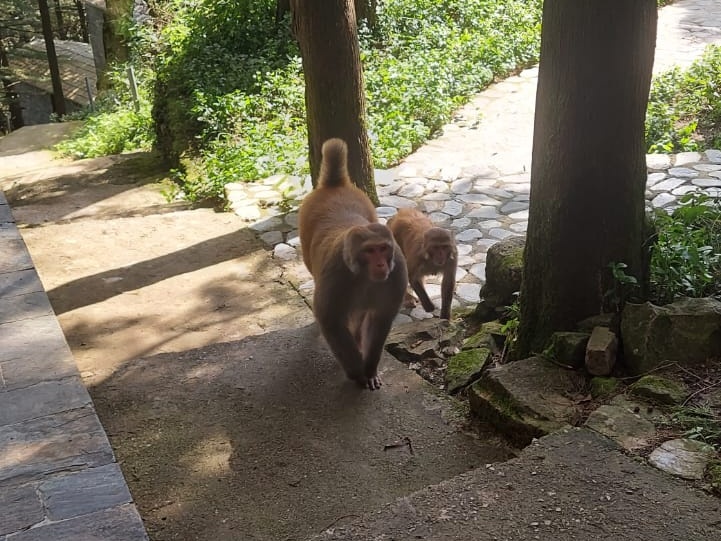
You do have to watch for the monkeys. They are common in India, but these were especially aggressive. They tried every trick in the monkey book – stealing food, snatching bags. One even entered my dorm room while I was inside reading a book and I barely noticed. I had to shoo him off, but thankfully he just made a way for the exit and didn’t wreck the room up. The people working at Tushita warn you many times about them and there are warnings on every door warning you to lock them and I suggest you to strictly heed them.
I found a lot of interesting people at Tushita. But the opportunity to communicate is limited since the course is in silence. The discussion groups were a good avenue. Some people just broke the rules and you somehow end up talking with them. It is interesting to learn about lives of strangers – on who they are, what they do, their spiritual journey and how they ended up in India for a course on Buddhism. It would not be easy to forget a lot of people I met there over the course of the 10 days.
Day 8 and day 9 were mostly dedicated for meditations. We also had other fun activities like Dharma Movie nights, where we watched two movies, one about Tenzin Palmo, an English monk who had a monastery in Bir, close to Dharamsala. The other was called Tugdam: Between Worlds, which is about Buddhist monks being able to meditate and retain consciousness after death to accelerate their spiritual progress or to gain enlightenment. There were neuroscientists who were studying the process for 7 years with the permission of Dalai Lama. I thought it was an interesting documentary, but it failed to show any scientific evidence for the process. We were also supposed to go for a stupa walk, but it didn’t happen because it was raining that day. On the 2nd last day we had a lights ceremony where we carried lighted diyas or earthern lamps around a stupa.
Om Mani Padme Hum
Om Mani Padme Hum is a Buddhist mantra that translates to the jewel in the lotus and used to signify compassion and wisdom.
Meditations and Buddhist theory
The course started with teaching of the four noble truths, as taught by the Buddha. They were presented as a doctor’s diagnosis.
- Suffering(Dukkha) – Life inherently involves suffering,dissatisfaction and impermanence.
- Cause of Suffering – Suffering in life is because of mental afflictions, that are chiefly ignorance, aversion and attachment. At the root is ignorance: we misunderstand the fundamental nature of reality, including ourselves. Attachment and aversion grow out of that.
- Cessation(Prognosis) – The way to fix it is to remove causes of suffering talked about above. This peaceful state ends duality and cycle of rebirth and we are free from delusion. This state is called Nirvana.
- The path – The path to get there is then talked about – this is slightly different in different sects of Buddhism, but at core involve ethics, meditation to inculcate mindfulness and wisdom.
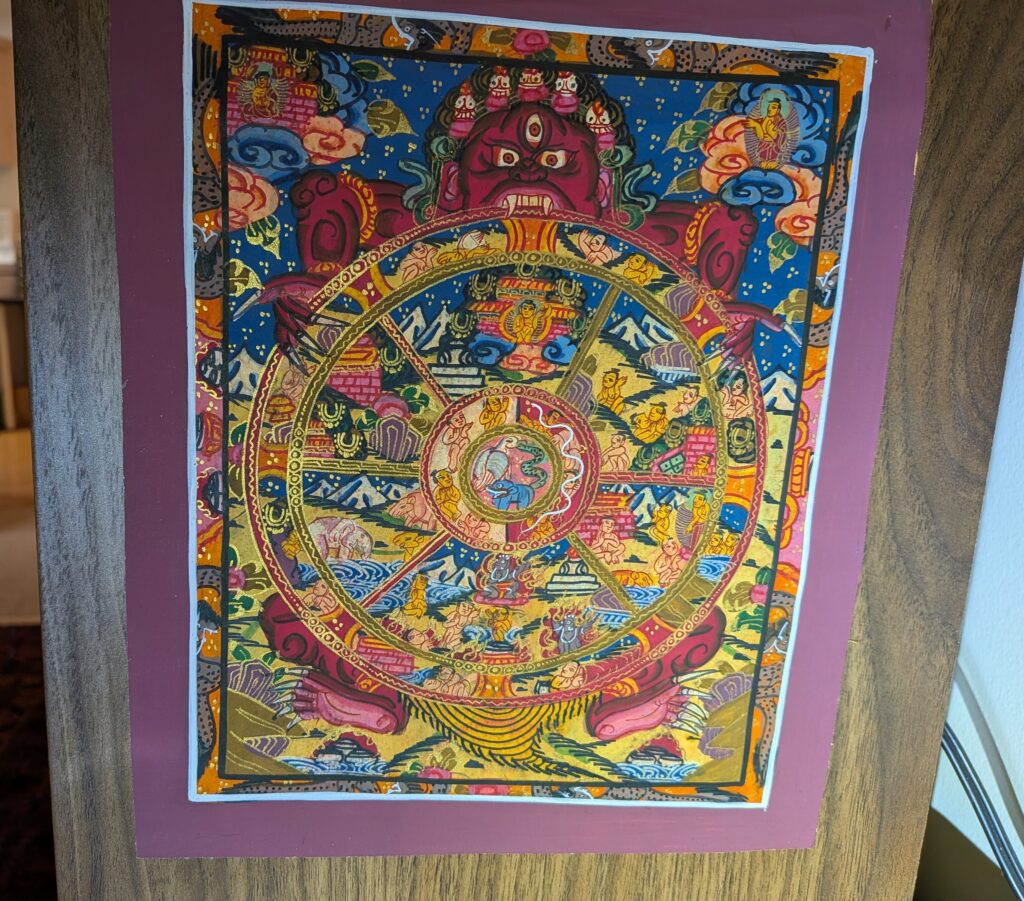
I really like the Wheel of Life from Buddhist teachings to explain how mental afflictions trap you into the wheel of samsara. It says mental afflictions results in ignorance, aversion or attachment. These are called the 3 poisons. These then lead you to either to do good deeds or bad deeds. These result in karma. Karma then can put you into 6 different realms – God realm, Demigod realm, Human realm, Hungry ghost realm and Hell realm. The wheel outside of this shows co-dependents like ignorance, consciousness, senses, contact, birth, old age and death. The wheel is held by the lord of death – Yama.
So if Wheel of Life shows how we get trapped, the third noble truth helps us get out of suffering. The cure is not something external, but fixing our mind to not misread reality. The easiest way to do that is with meditation. We did two types of meditations.
- Shamatha – This is the stabilizing meditation. This helps cultivate a calm, clear and focused mind. This is the foundation of everything. We progressed through different objects of focus. We first was breath, where we focussed on breathing through nostrils. Next was the mind, where we observed our mind and watched thoughts come and go like clouds in the sky and resting in awareness, where we rested in space without any object.
- Vipassana – This is the analytical meditation. In this we used that focused mind to investigate and cultivate positive traits. We focused on wisdom – particularly concept of no self. The other was compassion, where we cultivated compassion and loving kindness towards all beings.
The concept of no self is an interesting one. It is an experience where you realize that there is a person of you that exists, but the autonomous self, that is the me other than the body and mind does not exist. When you look closely, all you find is a constant flow of thoughts and experiences, and the mind builds a solid sense of me out of that flow. When you stop holding on so tightly to that constructed self, attachment and aversion start to loosen on their own, because there’s less of a me for things to be wanted by or threatening to. I ended up reading a book called I am That by Nisargadatta Maharaj from the library at Tushita that talked about this, but from a different philosophical point of view.
Mahayana Buddhism, which this center is a part of builds on this further with the concept of emptiness, which takes the same insight and applies it to everything else. It says it is not only the way we see ourselves that is the problem, but also how we see the world. Things appear solidly and independently, but they don’t. They can only exist when we and our mind gives it meaning. When we realize this we automatically stop being averse or grasp onto things outside of us.
Getting to Nirvana has many paths depending on which sect of Buddhism you follow, but most of it comes down to ethics, stop feeding the afflictions, meditation to steady the mind and wisdom, to see through the illusion of separate self and independent things. The whole path is also driven by compassion, the wish to be free not just for yourself, but also so that you can help others.
I felt I didn’t completely connect with the meditations and they ended up being laborious since going from nothing to meditating many hours a day is difficult. I found the teachings interesting, but didn’t completely connect with them either. But I did find the atmosphere really nice and good to think about my life. The shamatha meditations and lack of distraction from cell phone use also meant I could fly through whatever library books I picked up. Reading 200 pages within a few hours was no problem for me. This was very different from my regular 10 pages max a day. I remember reading a Buddhist book called Ego, Attachment and Liberation by Lama Yeshe, founder of Tushita. I ended up reading some pages of an edition of Bhagvad Gita by Swami Prabhupada, which I felt was the best edition I’ve read and also the book by Nisargadatta Maharaj that I talked about above.
Final Day and Life after Tushita
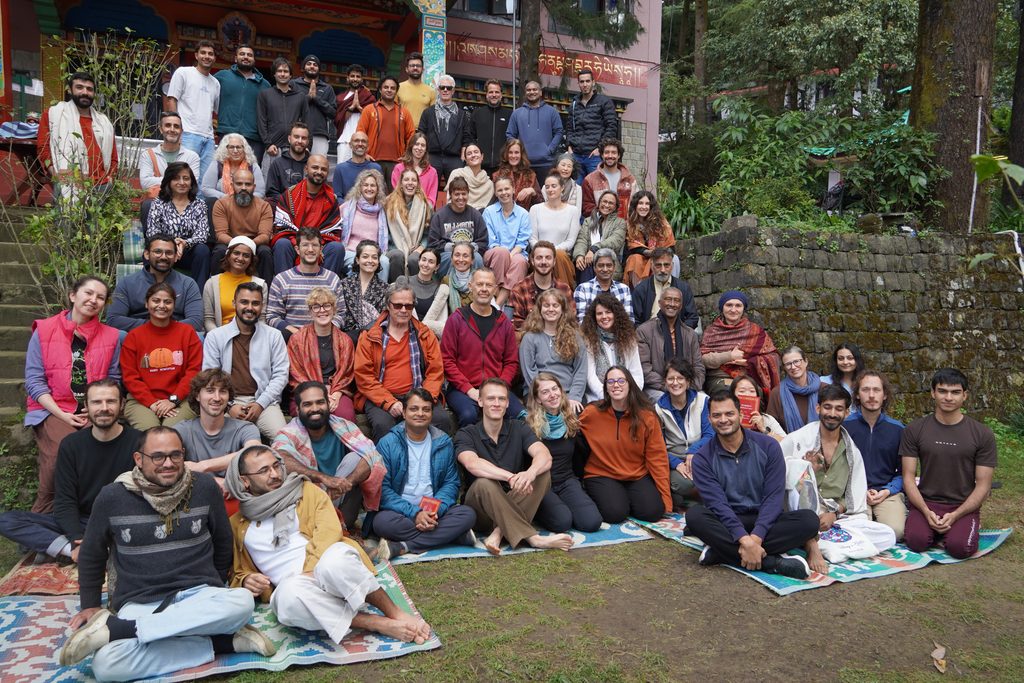
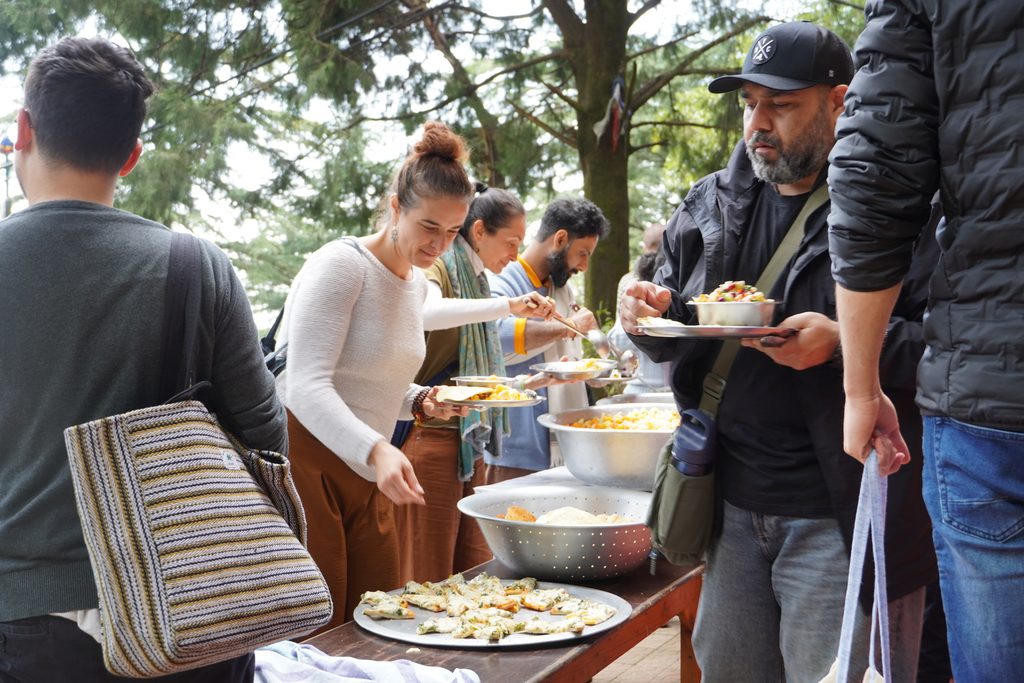
Very quickly I found myself on the last day. We did a final meditation, followed by a presentation by our teacher explaining how best we could continue our teaching and apply it to our daily life. There was also a quick presentation by the staff from Tushita. This was followed by a group picture and picnic lunch. The pizza was supposed to be the specialty. I didn’t try it, but I did take a big bowl of fruits and yogurt, which was really nice. After this, we checked out. It was mostly settling the laundry bills, there was a counter for donations and collecting our electronics. It was sad to say good bye to friends I had made over the last 10 days.
I remembered reading the book Siddhartha by Hermann Hesse, which I found very related to my time at Tushita. It really brought a change in me where I see a little bit of me in everyone else and little bit of everyone else in me. I think it let me see the world in a very different way. I also dedicate around 10 minutes to meditate 3 times a week. It is not much, but I want to build consistency than trying to accomplish something very quickly.
The experience also really opened me up on the destructive nature that electronics play on our minds and how it has made us lose attention span. We are the first generation in modern human history that have regressed in attention span. I have consciously tried lowering my cell phone use and I think I am going to attempt a digital detox day once every few weeks, just like a fast.
Link to course material: Personal Nextcloud Server, Google Drive link